
.png)

Payday Loan Debt Trap: Can a Consumer Proposal Help You Break Free?
Updated: Jul 21
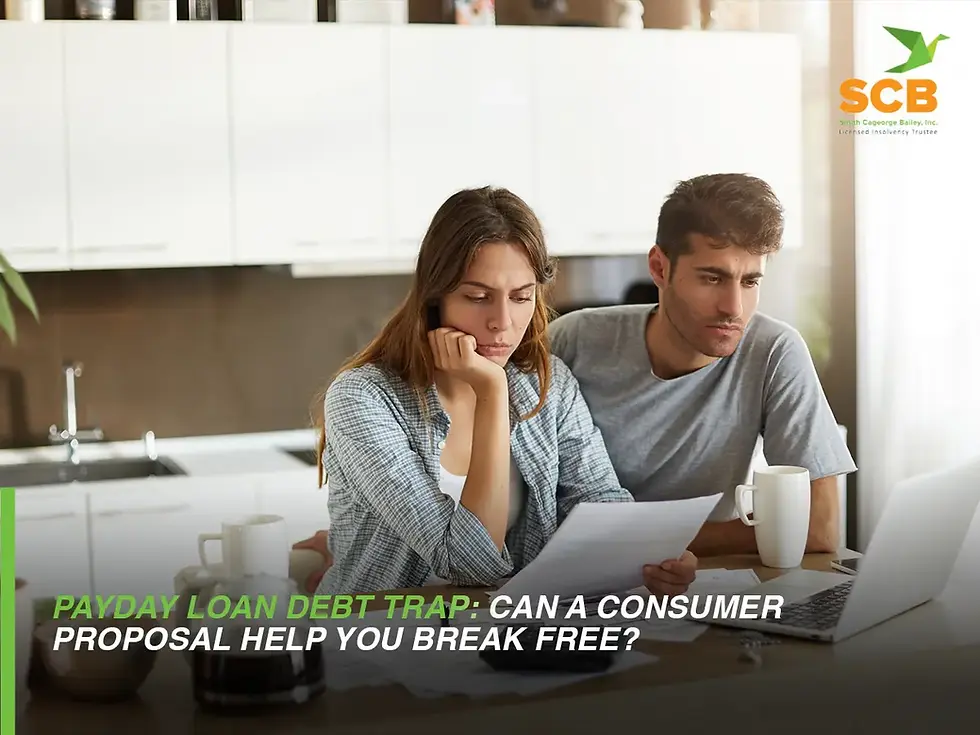
For many Albertans, payday loans aren't part of a long-term financial plan. They often begin as a way to cover an unexpected expense or bridge the gap until the next paycheque. But because payday loans are high-cost, short-term products, they can quickly become difficult to manage if repayment does not fit within your regular budget. The problem arises when one loan isn't enough, and borrowing becomes a regular part of managing everyday finances.
If you're relying on payday loans month after month, it's worth understanding why these loans can become difficult to escape and how a legal debt solution such as a Consumer Proposal may help you move forward.
Why Payday Loan Debt Can Be So Difficult to Overcome
Payday loans are intended to provide short-term access to cash. Unlike traditional loans that are repaid over months or years, payday loans are usually due within a short period. This can leave borrowers trying to cover the loan repayment and regular living expenses from the same paycheque.
As a result, some borrowers find themselves using a new loan to repay an existing one or borrowing repeatedly to cover essentials like rent, groceries, or utilities. Over time, borrowing shifts from addressing occasional emergencies to becoming part of a monthly financial routine.
This doesn't necessarily happen because of poor financial decisions. Changes in employment, rising living costs, unexpected medical expenses, or other life events can quickly create financial pressure that is difficult to manage without additional support.

When Does a Payday Loan Become a Debt Problem?
A payday loan becomes a larger financial concern when it no longer serves as a temporary solution.
You may benefit from professional debt advice if you:
Borrow before nearly every payday to cover regular expenses.
Have loans with more than one payday lender.
Are delaying bill payments to keep up with loan repayments.
Depend on credit to manage everyday living costs.
Feel there is no realistic way to catch up or reduce what you owe.
Recognizing these warning signs early can make it easier to explore your options before financial pressure continues to grow.
Can a Consumer Proposal Cover Payday Loans?
In most cases, yes.
Payday loans are generally considered unsecured debt, which means they can often be included in a Consumer Proposal alongside other unsecured obligations, such as:
Credit card debt
Personal loans
Unsecured lines of credit
Collection accounts
CRA income tax debt (in many situations)
A Consumer Proposal is a legally binding debt solution administered by a Licensed Insolvency Trustee under Canada's Bankruptcy and Insolvency Act. It allows eligible individuals to negotiate an affordable repayment arrangement with their unsecured creditors based on their financial circumstances.
Learn more about our consumer proposal services and how this legal solution may help combine unsecured debts into one structured monthly payment.
Before filing, a Licensed Insolvency Trustee will review your income, expenses, assets, and debts to determine whether a Consumer Proposal is appropriate for your situation and explain any other options that may be available.
If you're unfamiliar with how Consumer Proposals work, our guide on How Does a Consumer Proposal Work? explains the process, eligibility requirements, and what to expect before you decide whether it's the right solution.
How a Consumer Proposal Can Help Break the Payday Loan Cycle
A Consumer Proposal changes the way eligible unsecured debt is managed.
Rather than making separate payments to multiple payday lenders and other unsecured creditors, you make one structured monthly payment based on what you can reasonably afford. Once a proposal is filed, collection activity on included unsecured debts generally stops, and interest typically stops accumulating on those debts.
This allows many people to focus on rebuilding their finances instead of constantly trying to catch up with multiple repayment dates and growing balances.
For individuals who have a steady source of income who cannot realistically repay all of their unsecured debt, a consumer proposal may provide a practical path toward becoming debt-free without continuing the cycle of borrowing.
Is a Consumer Proposal the Right Solution?
A Consumer Proposal is not the right solution for everyone.
If your financial challenges are temporary, debt counselling or budgeting support may be enough to help you regain control. In situations where repayment is no longer realistic, personal bankruptcy may be the more appropriate legal option.
If you're comparing debt relief options, you may also find it helpful to read: What Debts Are Not Included in a Consumer Proposal or Bankruptcy? This article explains which debts can and cannot be addressed through these legal processes.
The right solution depends on your overall financial circumstances, including your income, assets, monthly expenses, and the type of debt you owe. Speaking with a Licensed Insolvency Trustee can help you understand these options and make an informed decision based on your individual situation.
You Don't Have to Navigate Payday Loan Debt Alone
Living with payday loan debt can be stressful, especially when borrowing has become part of your monthly routine. Understanding your legal options is often the first step toward regaining control.
At SCB Debt Solutions, we understand how overwhelming financial pressure can feel. Many of our clients are responsible people who encountered unexpected setbacks and simply needed clear, practical guidance.
If you're unsure which debt relief solution is right for you, our Licensed Insolvency Trustee can review your financial situation, explain your options, including a consumer proposal, debt counselling, or bankruptcy, and help you make an informed decision.
Book your free, confidential consultation with SCB Debt Solutions today to understand your options for managing payday loan debt and take the first step toward a more stable financial future.
FAQs on Payday Loan Debt
Q1. What is payday loan debt?
Payday loan debt is money borrowed through a short-term, high-cost loan that is typically due on your next payday. If it isn't repaid on time, additional fees and interest can quickly make the debt much harder to manage.
Q2. What happens if you don't pay off a payday loan?
If you don't repay a payday loan, the lender may charge additional fees, pursue collection activity, or take legal action where permitted. Missed payments can also create ongoing financial stress and make it harder to stay on top of other expenses.
Q3. Do payday loans ruin your credit?
Taking out a payday loan doesn't automatically affect your credit score. However, if the debt is sent to collections or results in a court judgment, it may negatively impact your credit and make borrowing more difficult in the future.
Q4. How can I get out of payday loan debt as quickly as possible?
Start by avoiding new payday loans, reviewing your budget, and creating a realistic repayment plan. If the debt has become unmanageable, speak with a Licensed Insolvency Trustee about options such as a consumer proposal or bankruptcy.
Q5. What happens if a payday lender objects to being included in my consumer proposal?
A payday lender can vote against your consumer proposal. However, if creditors representing the required majority of proven debt value accept the proposal, it becomes legally binding on all unsecured creditors included in the proposal, including those who voted against it.
Q6. Can multiple payday loans be included in one consumer proposal?
Yes. If the payday loans are unsecured debts, multiple payday loans can generally be included in one consumer proposal along with other unsecured debts such as credit cards, personal loans, and collection accounts.


